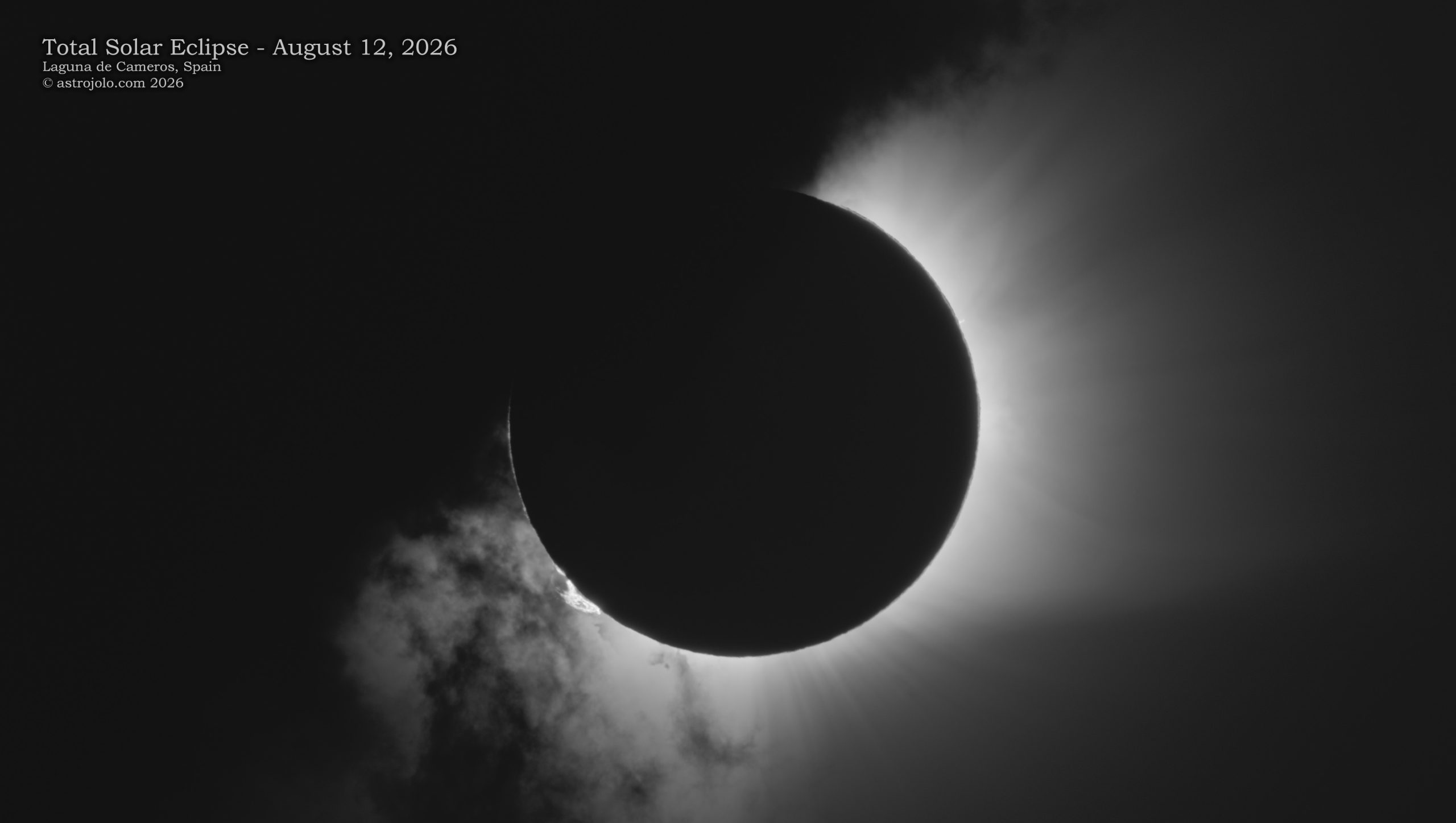
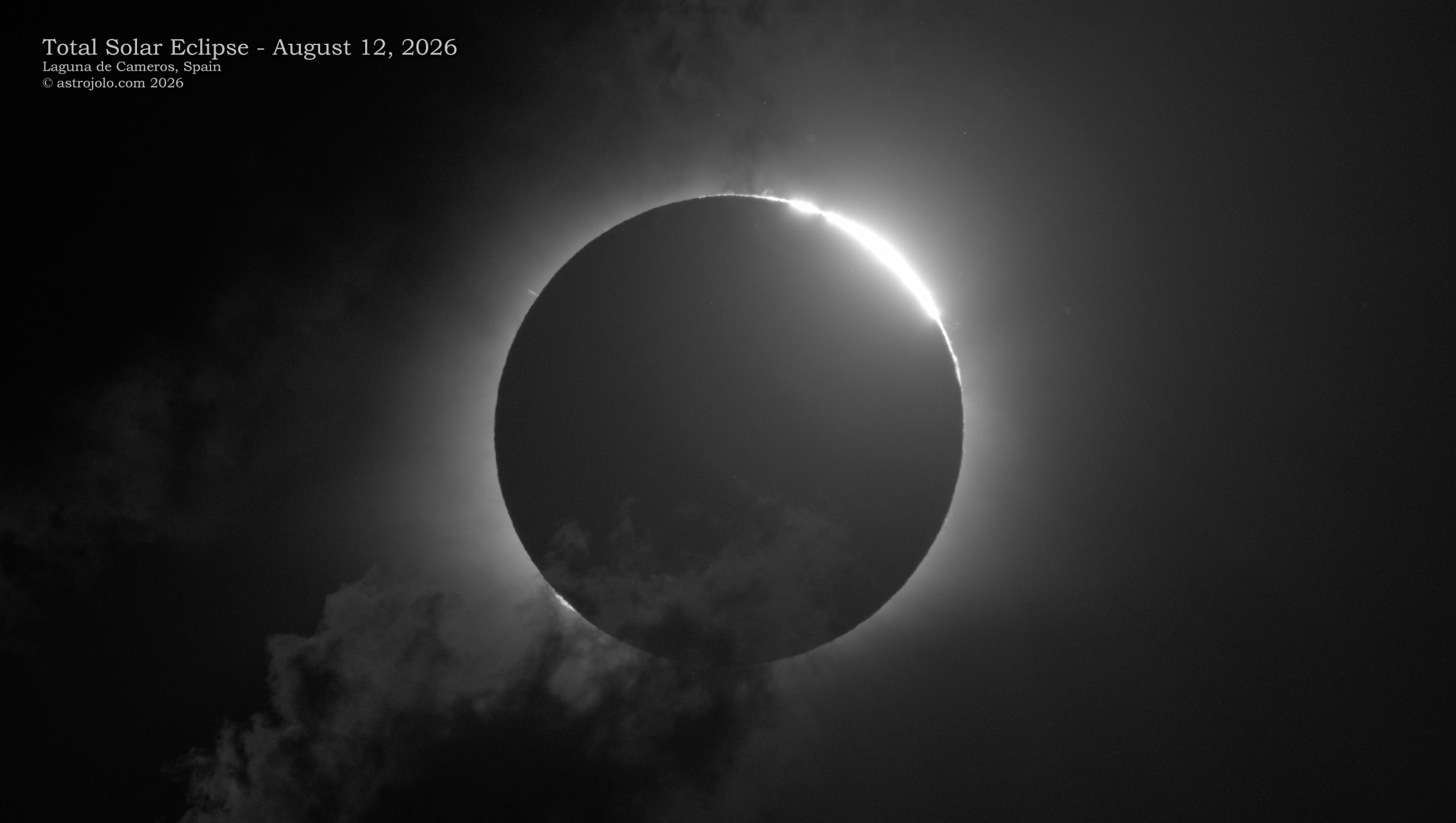
On 12 August 2026, thirteen of us – three families- climbed into the mountains of La Rioja in northern Spain to watch something none of us had ever seen before: a total solar eclipse.
Our observing site was in the mountains near Laguna de Cameros, a small village in the Camero Viejo area. Laguna itself lies at about 1,042 metres above sea level, in the upper valley of the Leza River. It is a wonderfully quiet part of La Rioja: small villages, open mountain landscapes, forests and deep valleys, far away from big cities. For astronomy, that already makes it attractive. For a total eclipse taking place low in the western sky, the wide mountain horizon made it even better.
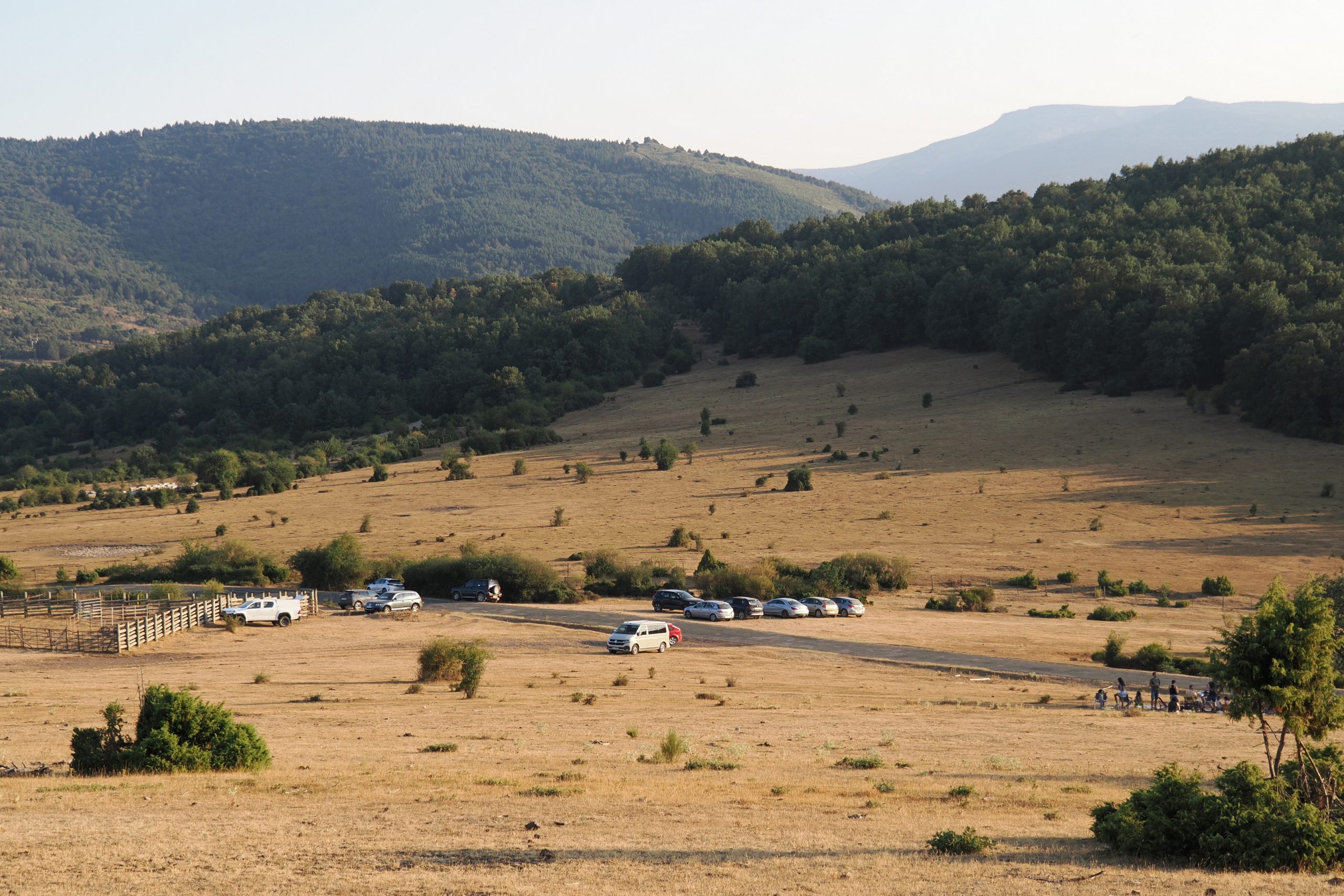
The eclipse was part of Saros 126 and crossed the Arctic, Greenland, Iceland and northern Spain. Globally, the maximum possible duration of totality was 2 minutes 18 seconds. From Laguna de Cameros, the partial phase began at about 19:33 local time, with maximum eclipse around 20:29. The local eclipse magnitude was about 1.010, and totality lasted approximately 1 minute 35 seconds.
Two of us in the group are amateur astronomers, so of course simply bringing eclipse glasses was never an option. We travelled to Spain with our astrophotography setups: telescopes, cameras, tracking mounts and solar filters. During the partial phases we photographed the slowly disappearing solar disk, while everything was prepared for those precious seconds of totality, when the filters could finally come off and the corona would become visible.
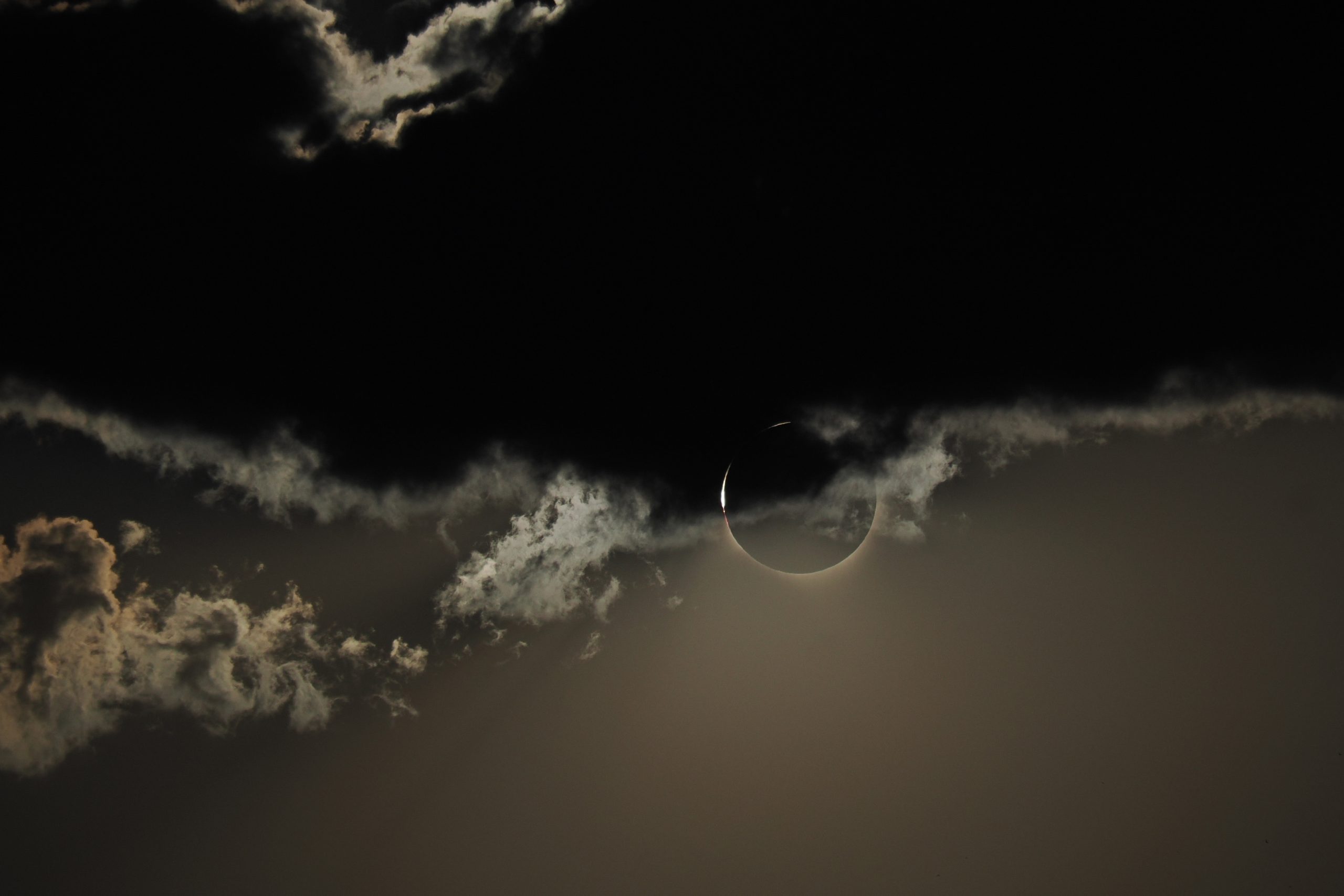
And then, just moments before totality, the only cloud in an otherwise clear sky decided to move directly in front of the Sun.
The level of panic increased very quickly.
For a moment it looked as if months of planning, a long trip and a mountain full of photographic equipment might end with us staring at a grey cloud at exactly the wrong time. Fortunately, the cloud moved enough for the most important moment. Maximum eclipse was visible. The landscape darkened dramatically, and the black disk of the Moon appeared surrounded by the delicate solar corona.
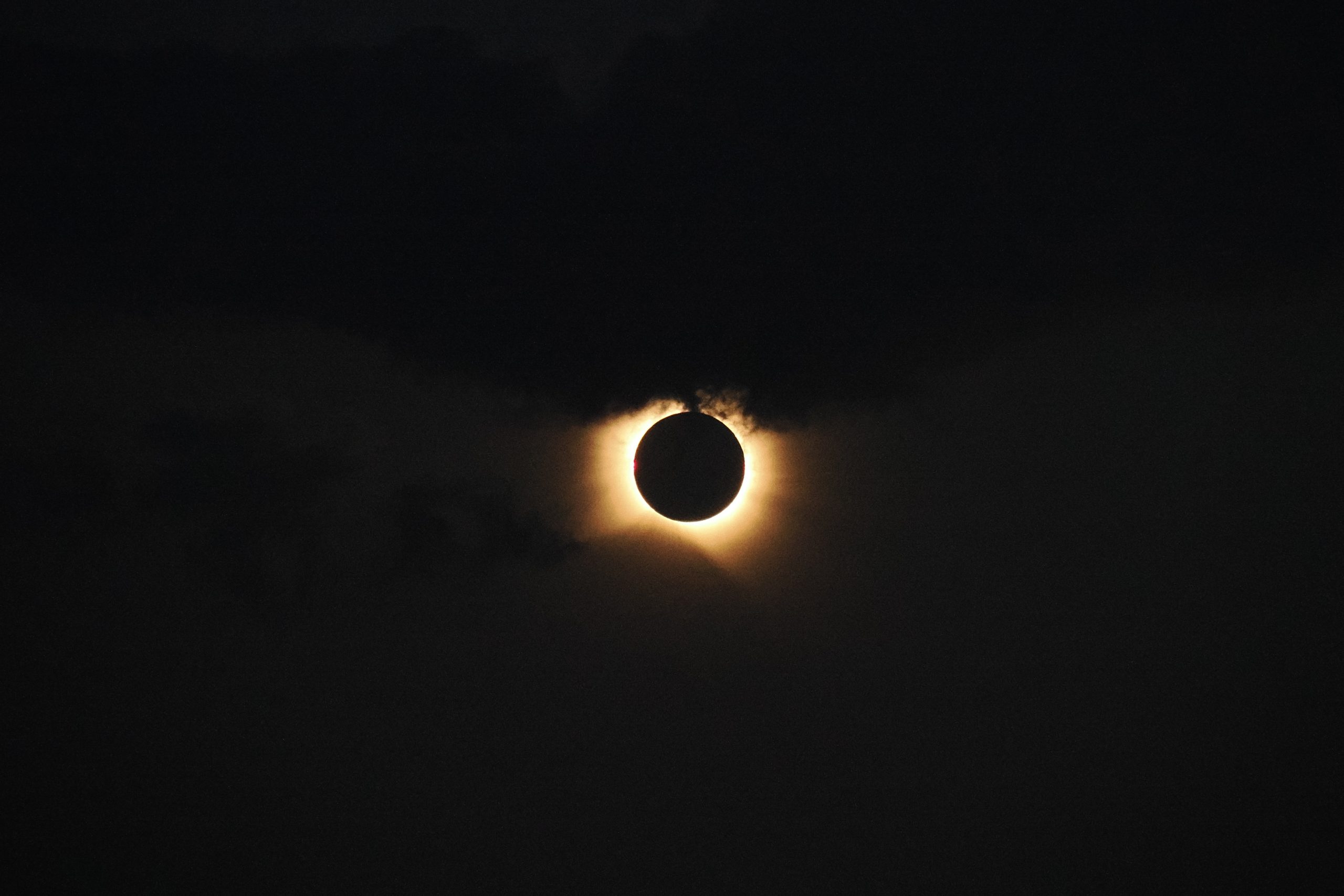
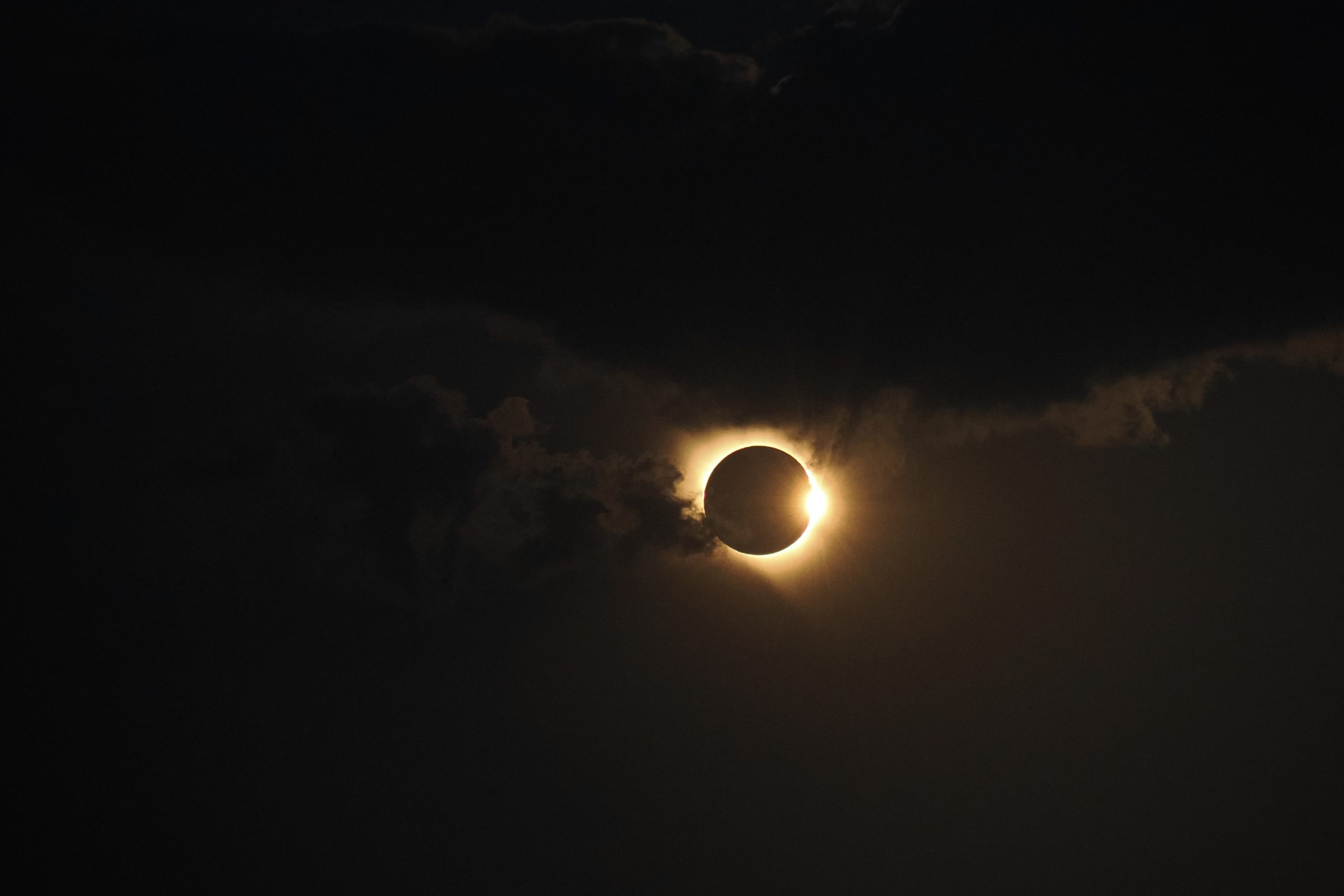
Ninety-five seconds sounds like a reasonable amount of time. During a total eclipse, it feels more like five.
It was the first total solar eclipse any of us had seen in person, and no photograph can really reproduce the experience of standing under the Moon’s shadow. We came to La Rioja hoping to see totality once.
We left already thinking about the next one.
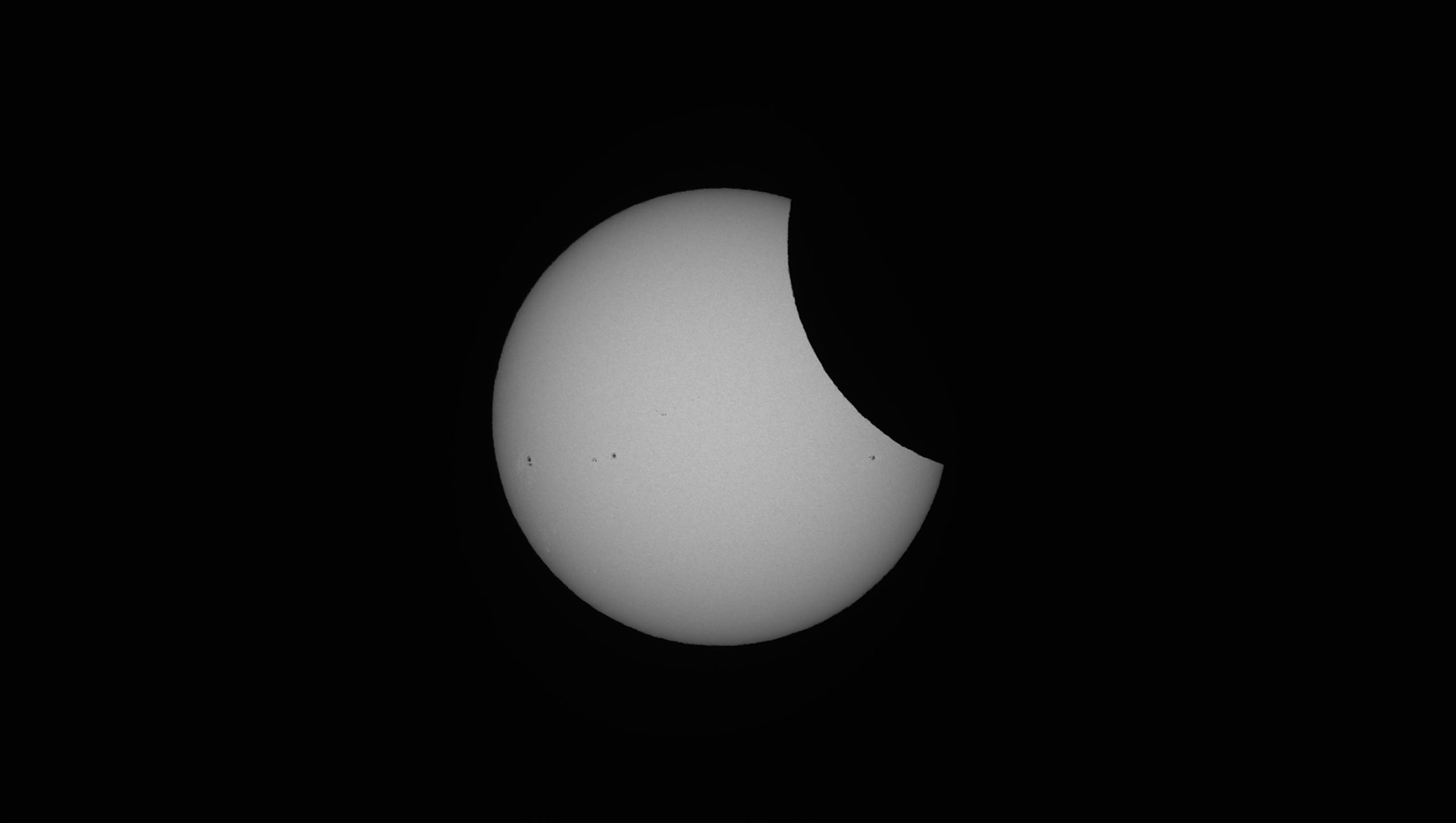
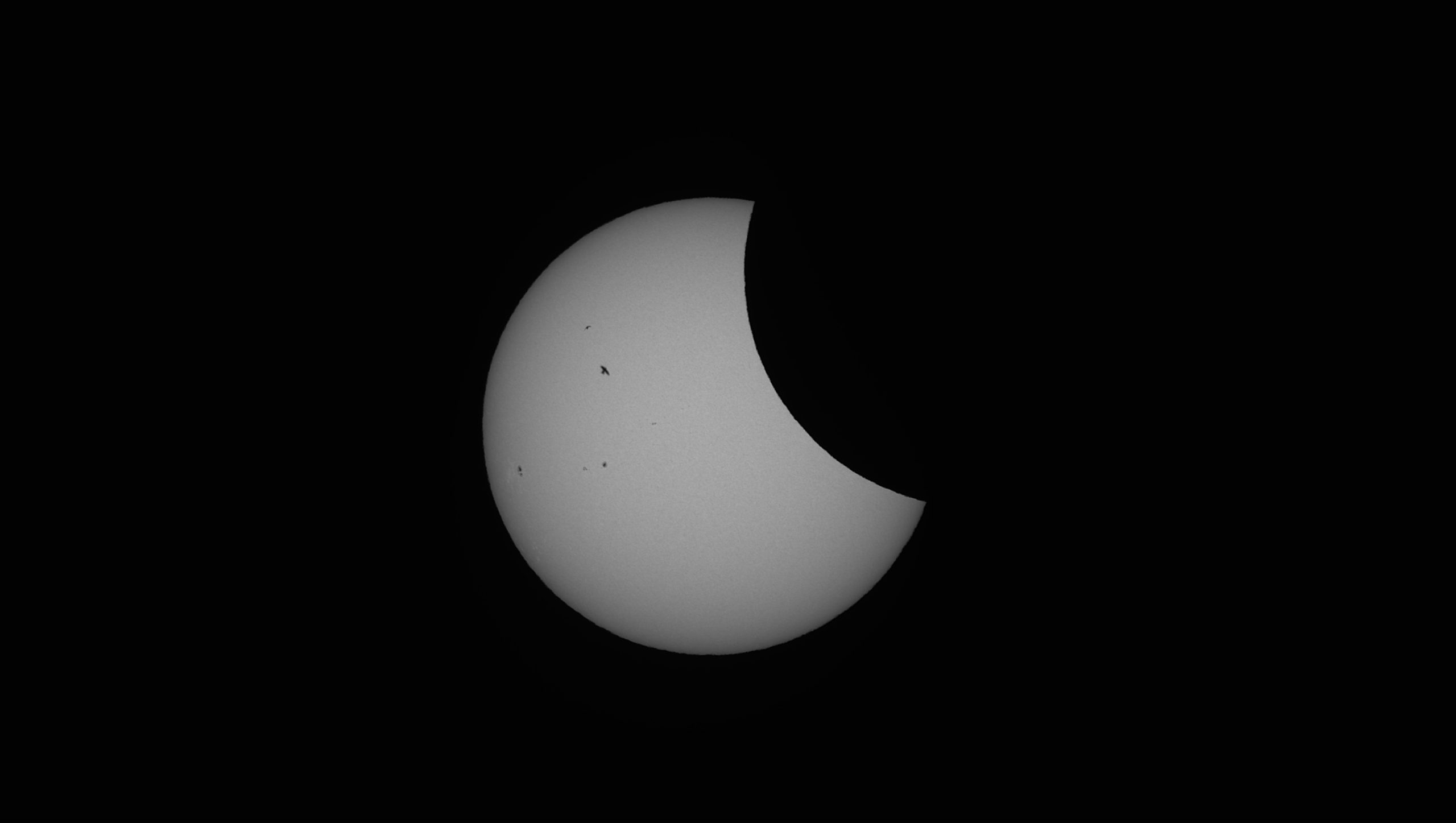
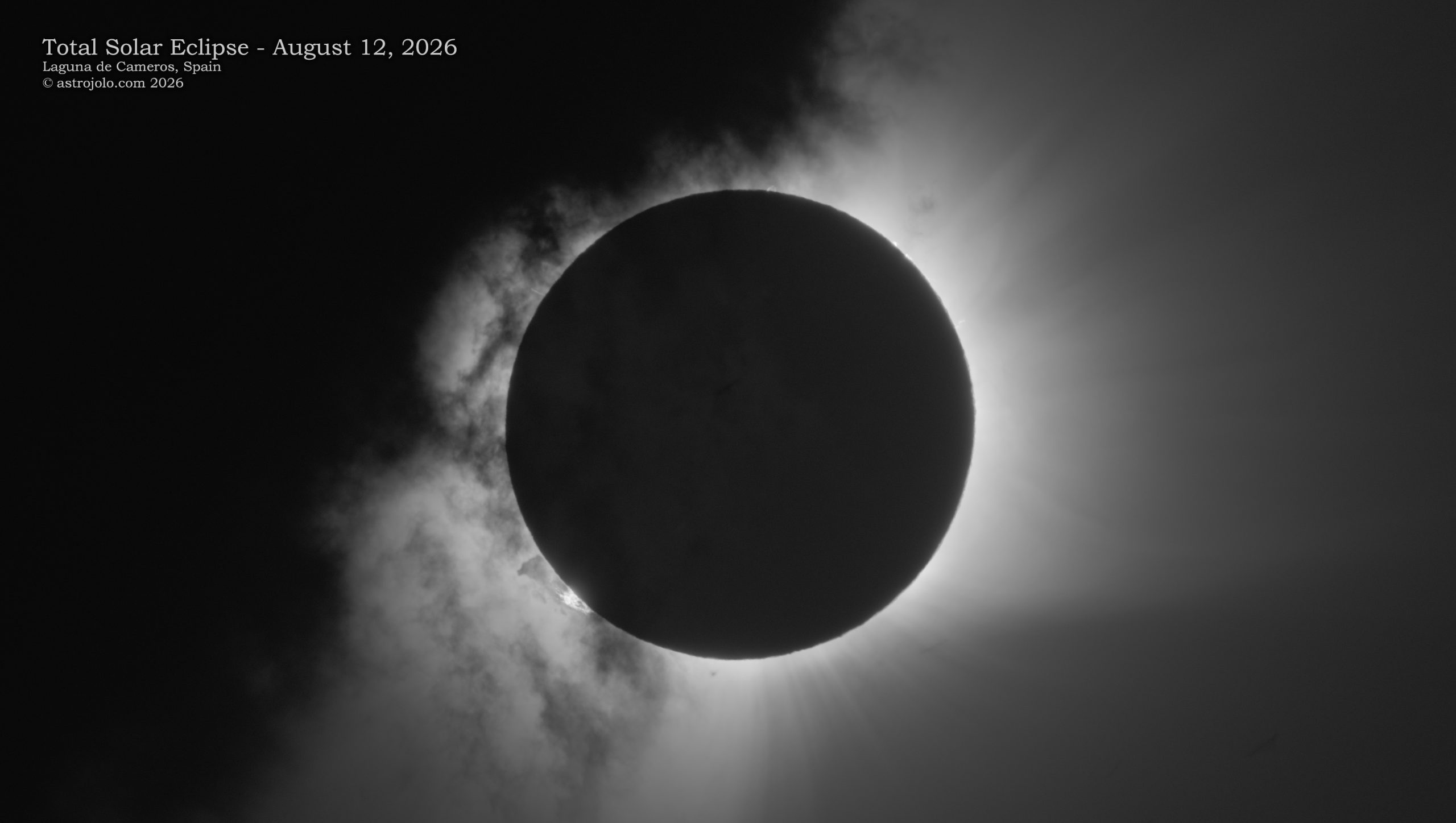
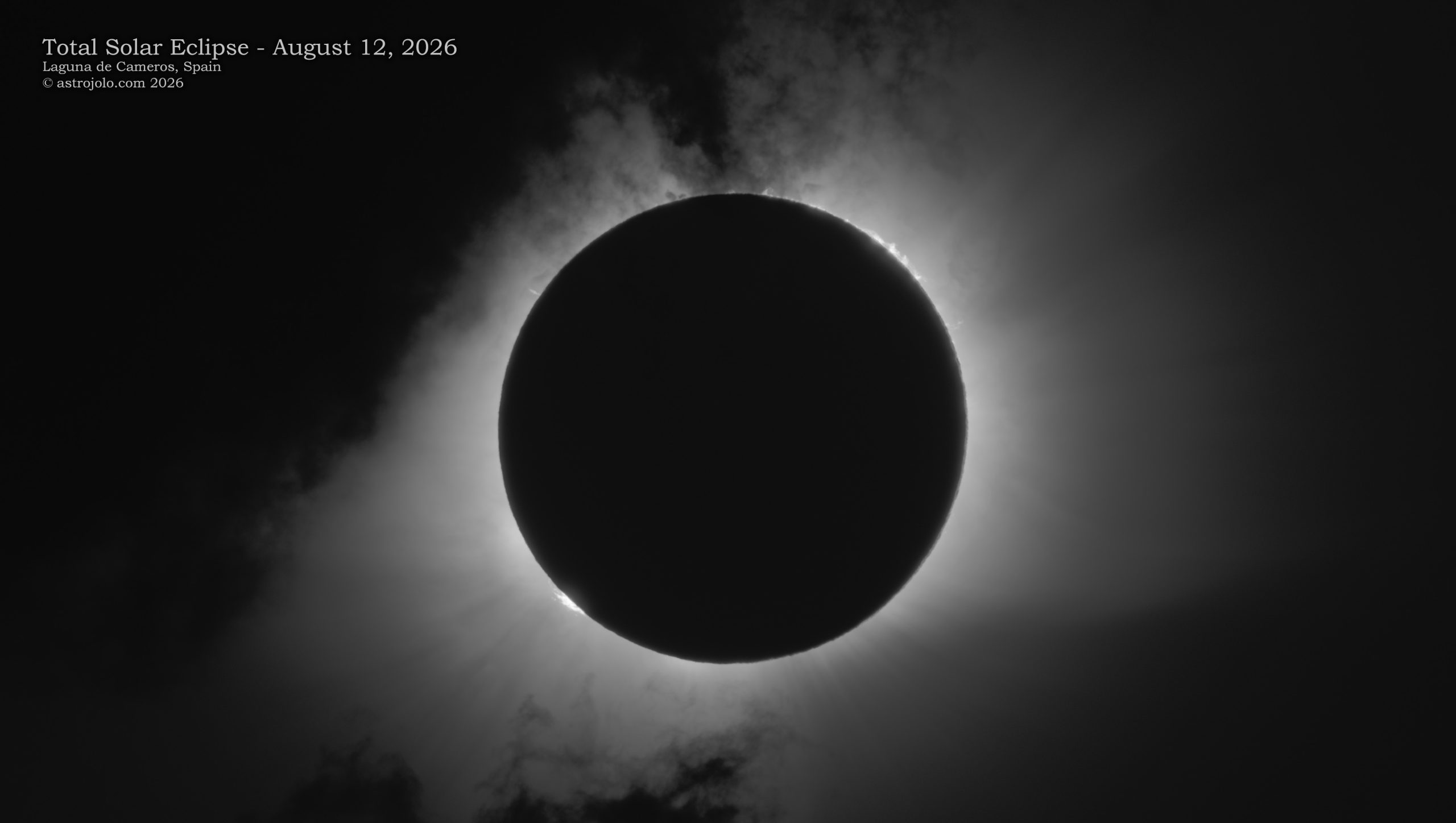
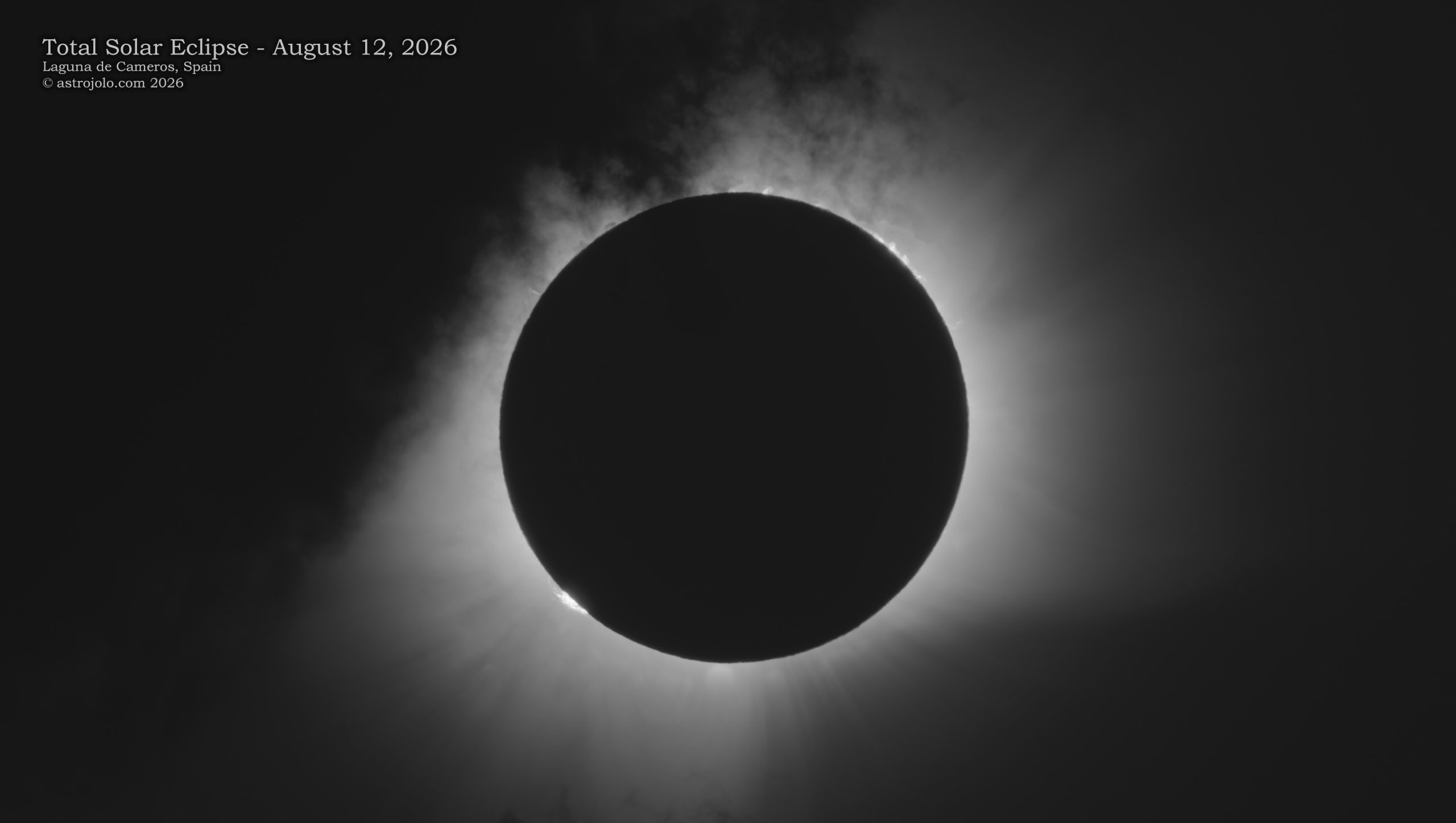
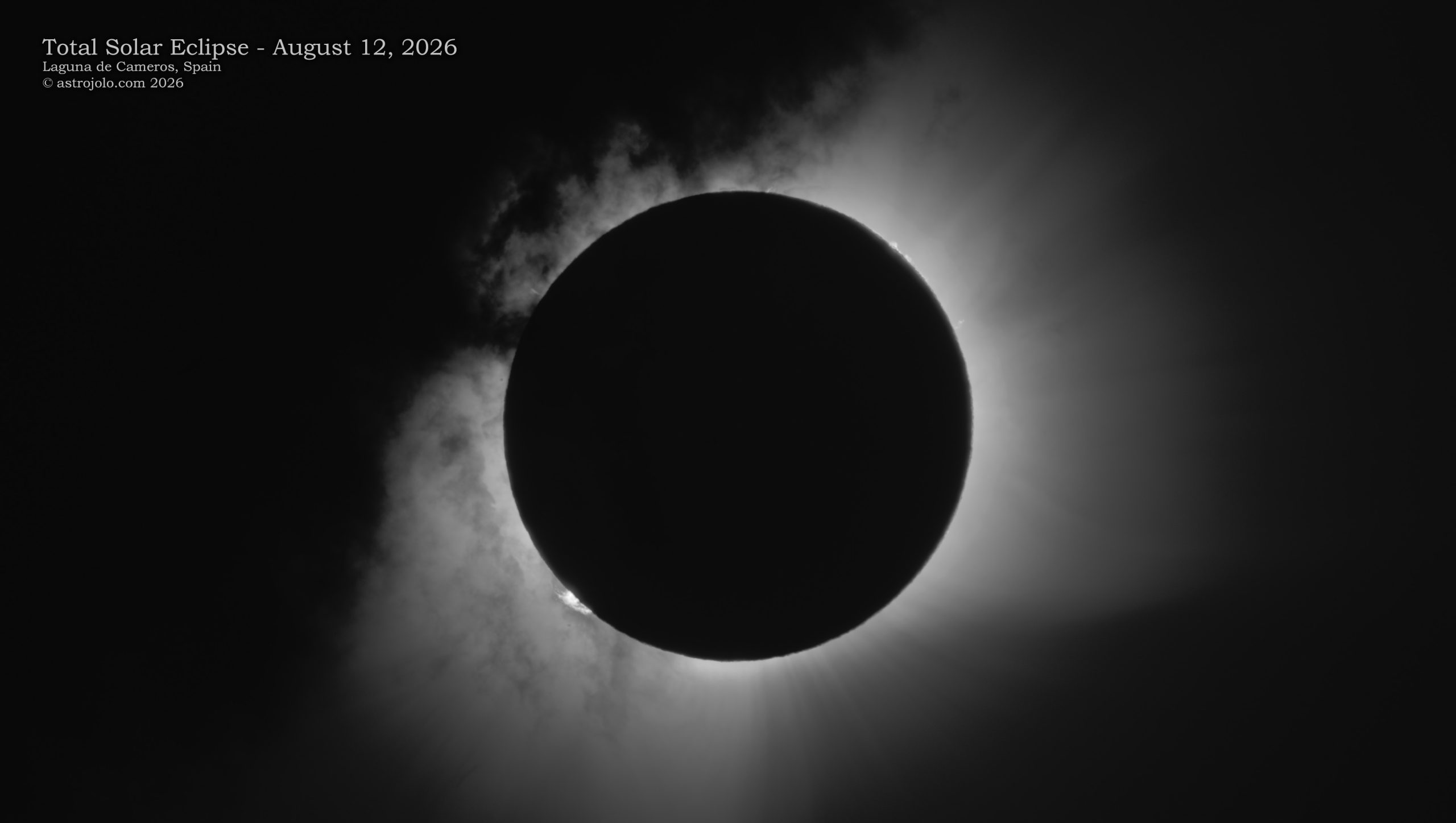
The colour photographs in this article were taken with an OM System OM-3 camera and a 14–150 mm lens. The black-and-white images are HDR compositions captured with a QHY MiniCam 8 through an 80 mm refractor. For each HDR image, exposures of 1 ms, 10 ms and 100 ms were combined to record both the brighter inner corona and the much fainter structures extending farther from the eclipsed Sun.


Super sprawa być na całkowitym zaćmieniu 🙂